Showing posts with label CivilWar. Show all posts

Tuesday, March 28, 2017

Georgia Legislator Wants to Make April 26 Confederate Memorial Day and April Confederate History Month


  3/28/17  Mike Victor


The Georgia legislature meets for only a few frantic weeks a year, after which these part-time lawmakers return to their day jobs.  What's astonishing is their ability to pack so much national embarrassment into such a brief legislative session.  

State Representative Tommy Benton (Republican), whose Georgia legislature web page describes him as a retired history teacher as well as a "life member of the National Rifle Association and the Sons of Confederate Veterans" while remaining "active in the Military Order of the Stars and Bars."  One organization he never found time for, despite graduating high school in 1968 at the height of the Vietnam War, was the United States military.  

Honoring our Confederate ancestors since 1938
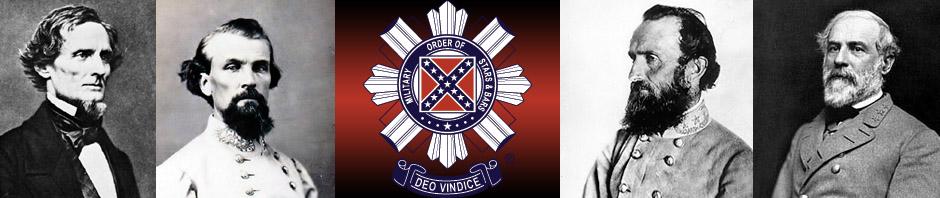
http://www.militaryorderofthestarsandbars.org/wp-content/uploads/2010/12/MOSB_web_header01.jpg

In case you're wondering, the Military Order of the Stars and Bars, according to their web page, "was founded in 1938 to honor the Confederate Officer Corps and the government officials of the Confederacy. Our members are all lineal or collateral descendants from these two groups… We are loyal Americans whose mission is to honor our ancestors and our Southern heritage."
Visit their web page and you will see a picture of the founder of the KKK, Nathan Bedford Forrest, staring out at you as if intent on burning a cross on your lawn with Jefferson Davis, the Confederate States of America, arrested a few hours south of Atlanta.  
But I digress.  
Tommy Benton (yes, that is his legal name, just as Georgia politicians Johnny Isaacson and Newt Gingrich bear the name of their birth certificates) won his election to the Georgia State House with 100% of the vote.  It would have been embarrassing if he didn't since he ran unopposed.  
Several days ago, he introduced House Resolution 644 to recognize April as Confederate History Month and rename April 26 Confederate Memorial Day.  It's apparently not the confederacy you might have read about in history books, though, because nowhere in the resolution is slavery or the Civil War mentioned.  
No, this confederacy was engaged in a noble but lost cause, a "four-year struggle for state's rights, individual freedom, and local government control."
That last point, sadly enough, is true.  It was only last year that our governor removed Confederate Memorial Day from the official state holiday calendar.   We still have a holiday but politely call it "state holiday."
Before you write off Benton's resolution as an attention-getting stunt by a bored white guy from a comfortably safe Georgia rural county, please take note that at least 3 of his colleagues agree with the need to honor the West's only explicitly white supremacist nation and are willing to co-sponsor it (Reps. Alan Powell, Steve Tarvin, and Jesse Petrea).  
The idea of honoring the struggle for the right to own black men, women, and children has for some reason drawn condemnation from the Georgia NAACP as well as members of the Georgia Legislative Black Caucus.
Benton apparently likes stirring the pot.  Last year he told the Atlanta Journal-Constitution that the Ku Klux Klan "made a lot of people straighten up."   Perhaps he was misunderstood - perhaps he wasn't referring to people but the hairs on the back of their necks because I know mine stand on end when I think about cross-burnings and lynching. The backlash he created stunned the good legislator.  Ah, shucks, he was just trying to honor his Southern heritage.  Do you know who the real perpetrator is here?  That's right, the Lame Street Media.  "The media has seemed to go out of its way to try and make this something that it's not," Benton said. "We are not creating anything that's not already in code. Confederate Memorial Day has been celebrated since 1874."The doctrine of states' rights has an ugly history down here. States' rights in the American south almost always means one thing:  the right of white Americans to deprive black Americans of their rights.  Before 1865, states' rights meant the right to own slaves; since then, it's meant the right to enforce Jim Crow and segregation.  Ask a white southerner to name the most egregious example of federal overreach in all of its dastardly forms - including rightwing talking points about judicial activists legislating from the bench - and you'll inevitably get to Brown v the Board of Education, the landmark 1954 ruling striking down separate but equal and beginning the long, painfully slow march toward racial integration.   The Civil Rights Act of 1964 and Voting Rights Act of 1965 met fierce, often violent resistance among southern whites who - once again - raised the hallowed-sounding notion of states' rights in their brutal campaign against the civil rights movement.   They took federal courts backed sometimes by federal troops to enforce.   It was no coincidence that the white people forming ugly crowds to prevent black children from attending "their" schools flew the Confederate flag whose ideals Benton now wants us in Georgia to honor.   
I'm always curious as to why Republicans clamor so much about states' rights when it comes to slavery or the right to keep blacks out of white schools but belong to a party that believes the federal government should override state and local governments on all matters from public safety (they want to force all states to honor concealed gun licenses issued by the weakest) to environmental protection (they want to ban California from setting stricter emissions standards than the EPA) to immigration (punishing states and cities that believe that enforcement of immigration laws is a federal rather than a state and local responsibility).  If there is a theme of respect for state and local governments in Republican behavior and policy, I fail to see it.
Put me in the camp of those who say that any right that involves depriving other Americans of rights is no right at all.  
This weekend while walking through historic downtown Decatur, I was once again struck by the enormous obelisk with CSA 1861-1865 engraved at its base.  Why is it still there, in the same grassy square where open air concerts will soon be held to Americans of all ethnic groups and regional origin?   Perhaps I am the only person to actually read the grandiose, self-serving nonsense about the brave men fighting for what they thought was right on four sides of the memorial, but such an anti-American monstrosity has no place in my town.  
But instead of tearing it down, or rededicating it to the victims of the transatlantic slave trade or the American holocaust of slavery or the century of civil rights workers, many of whom gave their lives just to be treated like human beings, some Georgians insist the Confederacy, the defunct white supremacist failed state that caused so much misery and suffering, needs more honoring, not less.  
The Confederate States of America is a failed experiment in explicit white supremacism.  Had it survived, had it not mellowed out and abolished the peculiar institution that prompted its formation, slavery would be as mindlessly and fiercely defended by southern whites as they now defend their related second amendment rights, broadened from their original intent to form a militia to suppress slave uprisings and hunt down fugitive slaves to stockpile weapons of war in your truck.   
How sad that 152 years after Georgia rejoined the United States of America following the failure of that grand slave-owning insurgency, there are some among us who would like to glorify and honor what was once the greatest existentialist threat to our country.
A Confederate Memorial Day with no mention of slavery would be like having a Third Reich Memorial day without mentioning the camps or the Holocaust.  Separating the cause of the Civil War - slavery - from the war itself is like trying to separate white from rice. It simply can't be done.
If you are a white supremacist take pride in the Lost Cause mythology and think that there was something noble in the human catastrophe of the civil war, you have the right to do so in the privacy of your own home.  Hell, you can even fly your traitor flag from the back of your truck.  No one is going to stop you apparently.
But don't ask the rest of us to set aside a day to sanctify your misunderstanding of history and your obliviousness to the suffering of the 20% of Americans who at the time of our country's founding were in bondage.  
If we do have a holiday, let's dedicate it to the spirit of unity that allowed Southerners finally to lay down their arms and admit they had been beaten, stopping the carnage they began 4 years earlier.  At a time when all Americans use the authority of the Constitution as the final authority to support their argument, even if they interpret it differently, let's not forget that there was a time when men throughout the south so hated that document and the government it authorized that they rose up in violent and bloody revolt, killing hundreds of thousands of Americans in the process.
We should never let that happen again.  Perhaps we could use a day each year to re-commit ourselves to never becoming so divided that words and sectional differences explode into actual bloodshed.

Maybe that would be the most fitting tribute to the Civil War.  

Monday, November 28, 2016

General Joseph E. Johnston's Bum Wrap - And How the Internet Can Set Things Straight…


by
Mike Victor

Nov 28, 2016

The Internet has made so many riches available for free and on demand anytime, anywhere.
Like this biography of Joseph Johnston, the confederate general Sherman drove back from Dalton, North Georgia, to the gates of Atlanta, where Confederate President Jefferson Davis, who never much liked Johnston, fired him in the summer of 64, replacing him with Hood, who launched an aggressive series of attacks collectively known as the Battle of Atlanta.


GENERAL JOSEPH E. JOHNSTON
AGE 83 YEARS

A MEMOIR

OF THE

LIFE AND PUBLIC SERVICE

OF

JOSEPH E. JOHNSTON,

ONCE THE QUARTERMASTER GENERAL OF THE ARMY OF THE
UNITED STATES,

AND

A GENERAL IN THE ARMY OF THE CONFEDERATE
STATES OF AMERICA.


EDITED BY

BRADLEY T. JOHNSON,

FORMERLY A SOLDIER IN THE ARMY OF NORTHERN VIRGINIA.


This delightful text is a gushing apology for Johnston, explaining that his careful, methodical retreats were part of a brilliant plan to draw Sherman deep into Georgia then destroy his army, far from his base of operations, tethered only by the thinnest of railroad supply lines. Hood's soft from defense to offense was all part of Johnston's plan that the poor general was fired right before he had a chance to execute it.  According to the author (Johnston writing in third person through cover of a biographer?), this plan would have succeeded were it not for the fatal blow to morale that Johnston's firing represented. Oh, and attacking north toward Tennessee not only failed buy destroyed the southern army.
Johnston was no doubt a capable general who managed to face McDowell, McClellan, then Sherman and hold his own at some level, playing the cards he was dealt as well as could be expected, but he was overshadowed by a fellow Virginian and West Point classmate (Class of 1829) who was also born in 1807.  This more aggressive classmate replaced him to command the Army of Northern Virginia after Johnston was badly wounded early in the war.  His name, of course, was Robert E. Lee.
There is a footnote to all this that falls under the heading  "You Can't Make This Stuff Up":
After the war, Johnston's conduct was praised by two unlikely men:  Grant and Sherman.  Sherman's commentary on his former adversary was so kind that the two men became good friends, such good friends that when Sherman died, Johnston served as pallbearer.
Unfortunately, the weather the day of the funeral was cold and wet and the elderly Johnston (13 years older than Sherman) fell ill and died shortly after the funeral.
In a very strange, indirect sense, Sherman killed his old adversary.  Even dead, Sherman was dangerous!

I have excerpted below the text summarizing the campaign against Sherman.  Enjoy.

The Georgia Campaign
[p. 115]

Johnston's plan was to strike Sherman as he was [fording the Chattahoochee River north of Atlanta] hoping to crush one of his columns before the other could aid him, and in case of disaster, he had the fortified position of Atlanta, which he had been preparing since June, for just such a contingency.
No one can now say that his whole campaign was not conducted on the best principles and with the highest generalship.
It was unjust in the extreme, to criticise his policy of retreat and fight, of fight and retreat. Lee in Virginia had been pursuing precisely the same plan since May, and had been forced back from the Rapidan to the James with no greater disparity of forces; and his movement met the entire sympathy and approval of the [Confederate] people and of the administration.

THE GEORGIA CAMPAIGN.

But for some inscrutable reason, by some logic even now unaccountable, there was a demand that Johnston should fight. He fought every day for seventy-four days.
That he should stop retreating. He did stop until his army was nearly surrounded.
That he should make a forward movement. That he should move around his adversary and throw himself on his communications.
Just at the point when he was about to declare decisive battle on his own terms, he was ignominiously relieved and Hood placed in command.
His removal was a shock to the military sense of the Confederacy. Lee, subordinate, patient, respectful, as he ever was, remonstrated in writing to the Secretary of War. He spoke openly, as he never spoke before or since, "That if General Johnston was not a soldier, America had never produced one. That if he was not competent to command that army, the Confederacy had no one who was competent." And he was firm in urging that Johnston be reinstated to command. He was relieved September 17, 1864.
Hood cut loose from Atlanta, carried out the programme directed by Bragg to Johnston in the preceding Spring, moved into Tennessee and lost his army.
On February 22, 1865, Johnston was directed by Adjutant-General Cooper to report by telegraph to Lee, at Petersburg, for orders. On the same day Lee ordered him to "Assume command of the Army of Tennessee and all troops in South Carolina, Georgia and Florida; assign General Beauregard to duty under you as you may select. Concentrate all available forces and drive back Sherman." ...
The Army of Tennessee, utterly broken up by the Tennessee Campaign, was coming into North Carolina by regiments and skeleton brigades, and there was hardly a vestige of the organization of an army left.  But Johnston did what was possible. He drew together the fragments from Charleston, Wilmington, and wherever they could be laid hold on, and concentrated them near Goldsboro, North Carolina, to delay Sherman and prevent his junction with Grant; while he hoped that Lee might disengage himself from Richmond, join him, and they together might defeat Sherman.


Thursday, October 11, 2012

This Hallowed Ground by Bruce Catton - Outstanding Read!


This Hallowed Ground
by Bruce Catton
A Review

There are not enough superlatives to do justice to this book.  I read it as a teenager and bought it in a Washington bookstore for my son but ended up reading it again myself.  As many reviewers have noted, if you read only one book about the Civil War, read this. Bruce Catton has a lyrical poetic style that weaves colorful anecdotes with sweeping prose that makes about as much sense as anyone can of the horror of America's bloodiest war by far.
First published in 1955, before the civil rights movement entered into the consciousness of most educated Americans, This Hallowed Ground was remarkably prescient, referring repeatedly to the painful issue not just of slavery but of race and of the inevitable reckoning that would have to come if the "peculiar institution" were abolished once and for all.  Eight years before Martin Luther King was to deliver his "I Have a Dream Speech," Catton could see that almost a century after the Civil War, the United States remained a work in progress.
Catton avoids the pitfalls that trap many historians, such as a compulsion for detail that misses the forest for the trees, or a contemporary interpretation whose bias makes later readers wince.  When Catton drills down to a battlefield, he gives just enough detail to create a vivid word picture but is adept at zooming out and showing us how the battlefield fits in the campaign, and the campaign in the war, and the war in the history of America.  Long before Ken Burns' PBS Civil War series had been conceived (Burns was only 2 when the book was published), Catton peppered his narrative with extracts from letters and diaries of the ordinary men who had a front row seat to this extraordinary history.
Perhaps because of all the shouting going on in American politics today about what it means to be an American and the proper scope and power of the federal government, there was something eerily contemporary about the book's opening. Following arrests made in Baltimore, "when Chief Justice Roger Brooke Taney issued a writ of habeas corpus to set one of these free, President Lincoln blandly ignored it... The Supreme Court had indeed been flouted, the Constitution had been stretched, perhaps even broken (depending on one's point of view), scores of people were being held in prison without due process of law... No matter.  Maryland was not going to go out of the Union."  And I could not help think of today's political attack ads when reading that "men who were whipping themselves up to the point where they would refuse to try to get along with one another were, at the same point in time, doing precisely the things that would bind them together forever whether they liked it or not. "  But for all the harsh words, today's acrimony has not spilled over into violence, as it did on the senate floor in the opening scene of the book with the  1856 caning of Senator Charles Sumner.  But the compulsion of demonizing one's adversaries remains:  "All of the things that were slipping beyond hope of easy solution - ... varying interpretations of the American dream - all of these somehow might hinge on what was done about Kansas, so that the wrong phrase in an enacting clause could mean earth's best hope lost forever."
If Catton's work had been fiction, it would have been rejected for lack of plausibility.  Given the carnage of the war that was to come, why would volunteers be so eager to fight that "soldiers sent home in Indiana threatened to shoot their colonel"?   
How could it possibly be that the house chosen to host the surrender that would end this terrible war would be that of Wilmer McLean, a Virginian who found his Bull Run home too caught up in the war's opening battle, so moved to Appomattox?  Who knew that Grant not only owned a slave at one point but didn't care all that much about slavery one way or the other until about 1861?  Or that the two generals most instrumental to ending the war were both from Ohio and overlapped at West Point (Grant was a senior when Sherman was a plebe)?  Or that on the very morning that Sherman was to accept the surrender of General Johnston he received a telegram telling him of Lincoln's murder?  And the contrast between General Lee - "
tall, gray, one of the handsomest and most imposing man who ever lived, dressed today in his best uniform, his sword belted at his waist" and the man who received his surrender "US Grant, rather scrubby and undersized, wearing his work in close, with mud spattered boots and trousers and a private's rumpled coat with his lieutenant general stars tacked to the shoulders" at a surrender ceremony where Grant had to borrow ink from the Lee and Lee had to borrow paper reflected staging too perfect for a good fiction editor.
His writing pulls you in and keeps you riveted such as with this description of Antietam:

There never was another day like Antietam. It was sheer concentrated violence... it had all of the insane fury of Shiloh with this difference:  at Shiloh the troops were green ... at Antietam the men were veterans and they knew what they were about... so that the dawn to dusk fight above Antietam creek went into the records as the most murderous single day of the entire war.  


Sherman's march to the sea is described in a way that rivals the far more biased and regional fiction of Margaret Mitchell:  "Smoke filled the sky like a gigantic ominous signal as Sherman's army pulled clear of the city [of Atlanta] and started for the sea… And so began the strangest, most fateful campaign of the entire war, like nothing that happened before or afterward. These federals were not moving out to find and destroy an armed enemy; the only foe that could give them a fight, Hood's army, was hundreds of miles off to the rear, and everybody knew it. They were not being asked to hurry; 15 miles a day was much less than these long legged marchers could easily make, and everybody knew that too. Their mission was to wreck an economy and to destroy a faith – the economy that supported the thin fading fabric of the Confederacy, the faith that believed the Confederacy to be an enduring creation and trusted in its power to protect and avenge."  The men were "conscious agents of this destruction; men who trampled out the terrible vintage of the grapes of wrath, led by an implacable general who was more and more coming to see a monstrous but logical destiny in his mission… For Sherman was not fighting and opposing army now; he was fighting an idea, knocking down the last shredded notion that the Southern Confederacy could exist as an independent nation, moving steadily and relentlessly not toward a climactic engagement but simply toward the end of the war."
The final days and aftermath of the Civil War are such well-trodden ground that it is surprising that no author before or since has really topped Catton's riveting description of the end:

Until this Palm Sunday of 1865 the word Appomattox had no meaning. It was a harsh name left over from Indian days, it belonged to a river and to a country town, and it had no overtones. But after this day, it would be one of the haunted possessions of the American people, a great and unique word that would echo in the national memory with infinite tragedy and infinite promise, recalling a moment in which sunset and sunrise came together in a street glow that was half twilight and half dawn.

Like a brilliant movie director, Catton pans his camera over the horrific cost and inevitable consequences of the Civil War in ways that make historical abstractions come alive:

Here and there all over the country where the mounded graves of half a million young men who had been alive and unsuspecting when all of this began. There would be more graves  to dig, and when there was time there would be thin bugle calls to lie in the still air on a handful of dust drifted down on a blanketed form, but most of this was over. A little more killing, a little more marching and burning and breaking and smashing, and then it would be ended.
Ended; yet, in a haunting way, forever unended. It had laid an infinity of loss and grief on the land; it had created a shadowed purple twilight streaked with undying fire which would live on deep in the mind and heart of the nation, as long as any memory of the past retained meaning. Whatever the American people might hereafter do when one way or another take form in color from this experience.
If Catton can be faulted, it is for a certain tendency to repeat but his prose is so lyrical, almost hypnotic, that he can be forgiven.  He also shares the compulsion of all historians to assign meaning to events, even if some things, perhaps most things, just happen.   Historians probably would not be historians if they did not discount the role of randomness, meaningless, and blind chance.  But I find myself so mesmerized by Catton's authoritative writing - at times he seems to have known the protagonists personally - that I find myself wanting to believe his sweeping, all-explanatory narrative.  

Search This Blog